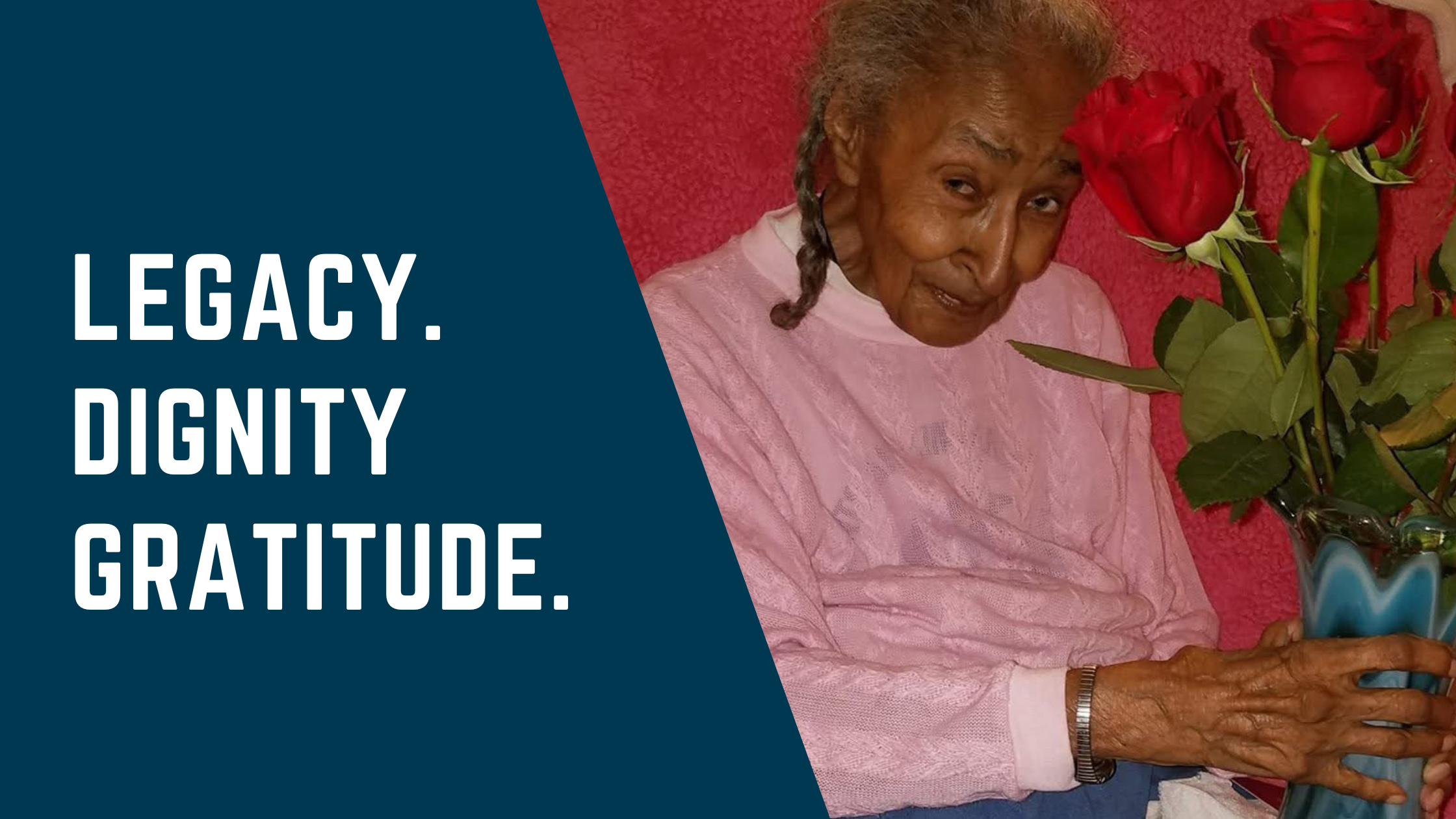
Before Nia Richardson ever worked at Meals on Wheels Durham, her family was on the receiving end of the same kind of care. Her great-grandmother, Margie, got meals and friendly visits from a mobile meals program in New Jersey from age 90 until she passed at 104. Those daily deliveries meant Margie could keep living in the home she’d made her own for decades. Here’s how that legacy shapes the way Richardson tells our neighbors’ stories today.
Margie Johnson’s home was the premier spot for family and community members to spend time. A large, three-family house in New Jersey is where she raised her family, hosted parties, and called home for decades. Her great-granddaughter, Nia Richardson, lived there as a child.
In the last 14 years of her life, mobile meals brought to Johnson's door helped her continue living at home.
For Richardson, this connection to Meals on Wheels began in that home during her childhood. That connection inspired her move to Durham, North Carolina, where she brings communications and events expertise to her role as Meals on Wheels Durham's Director of Communications and Community Engagement.
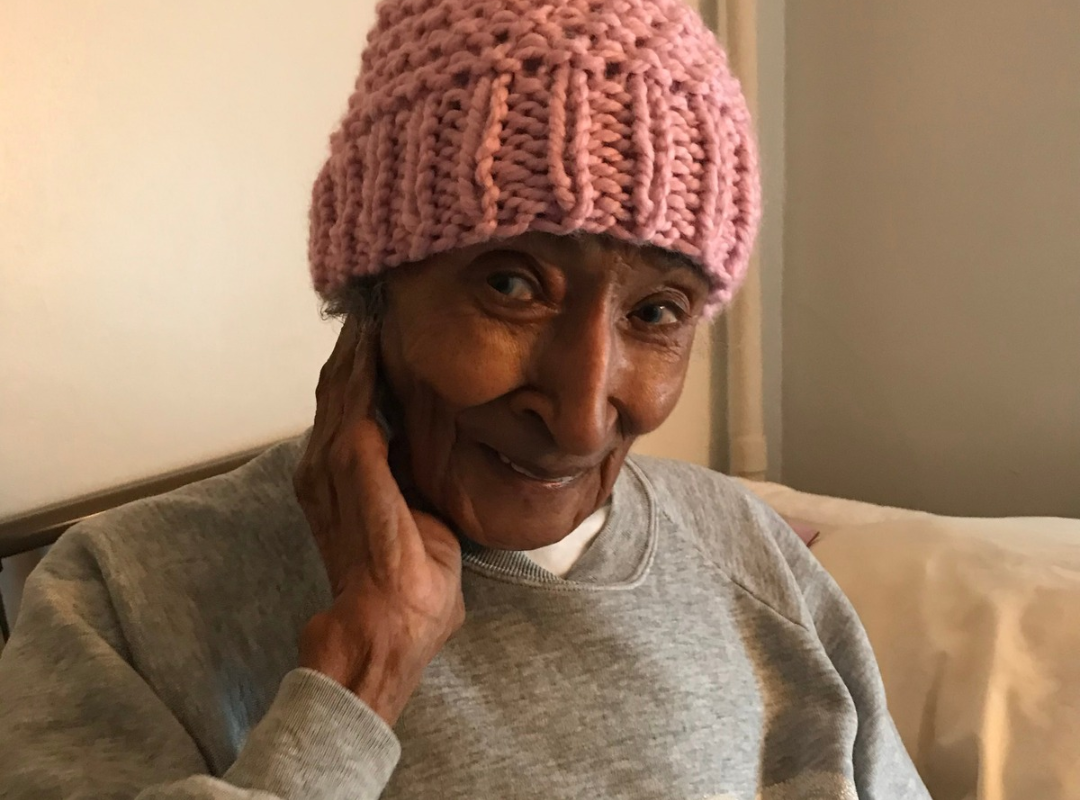
Margie received services from Chrill Care, Inc. in New Jersey, starting from age 90 until passing at age 104. Chrill Care, Inc. has a mobile meals service. During Margie’s time as a client, the program also offered friendly visit programs where a volunteer would visit a client’s home and talk, whether that conversation was about meals or what was going on in their lives.
Richardson’s mother, Tiffani Barnes, says that even though each delivery driver was only stopping in for a few minutes each day, this was still a consistent source of interaction for her grandmother.
“She never had to worry about having something to sustain her,” Barnes says.
Meals on Wheels organizations serve homebound adults, defined more broadly by the inability to go out to get resources to prepare meals. Specifications to receive MOW services depends on the county and state of distribution.
But being homebound does not equate to being trapped in one’s home.
As her grandchildren applied for services she needed as an older adult, Richardson’s great-grandmother’s strong personality and opinions of her own care conflicted with their desires. Richardson says her great-grandmother received meals for an extended period of time, because at one point she was admitted into a nursing facility but did not want to be there.
“Now looking back on it as an adult, I understand why being in her home to age was so important. She’d been living there for decades, and to be able to have those meals there helped her to live at home.”
Nia Richardson
Richardson says her great-grandmother lived in a large, three-family home. She served as a landlord to both family and community members. She hosted parties and her home was the premier spot for people to spend time.
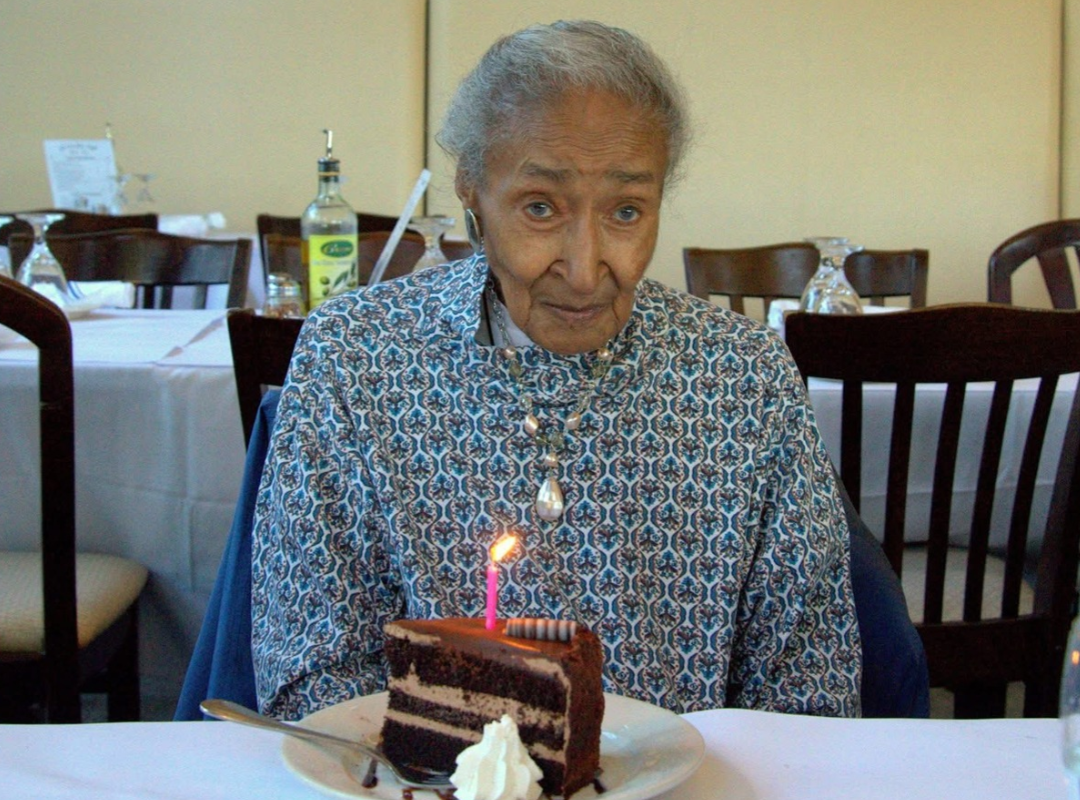
Margie Johnson celebrating her 102nd birthday with family
“She was the matriarch of the family, and not only of our family, she was a matriarch to a lot of people in the community.”
Nia Richardson
Her great-grandmother was a financially responsible woman, Richardson says. She came from a sharecropping background in the South and used the money she earned from sharecropping to move up north. She also cleaned the homes of people in the financial industry, who introduced her to investing.
After she came north, she worked at Westinghouse until she retired. Then she acquired stock, and that investment helped her stay in her house as she got older.
Retirement didn’t mean she stopped working. For almost two more decades, she worked part-time doing janitorial work, both independently and for a local private school. She also worked for a friend doing catering for 20 years.
Richardson says her great-grandmother was a “trailblazer” as a financially independent, widowed Black woman raising generations of a family.
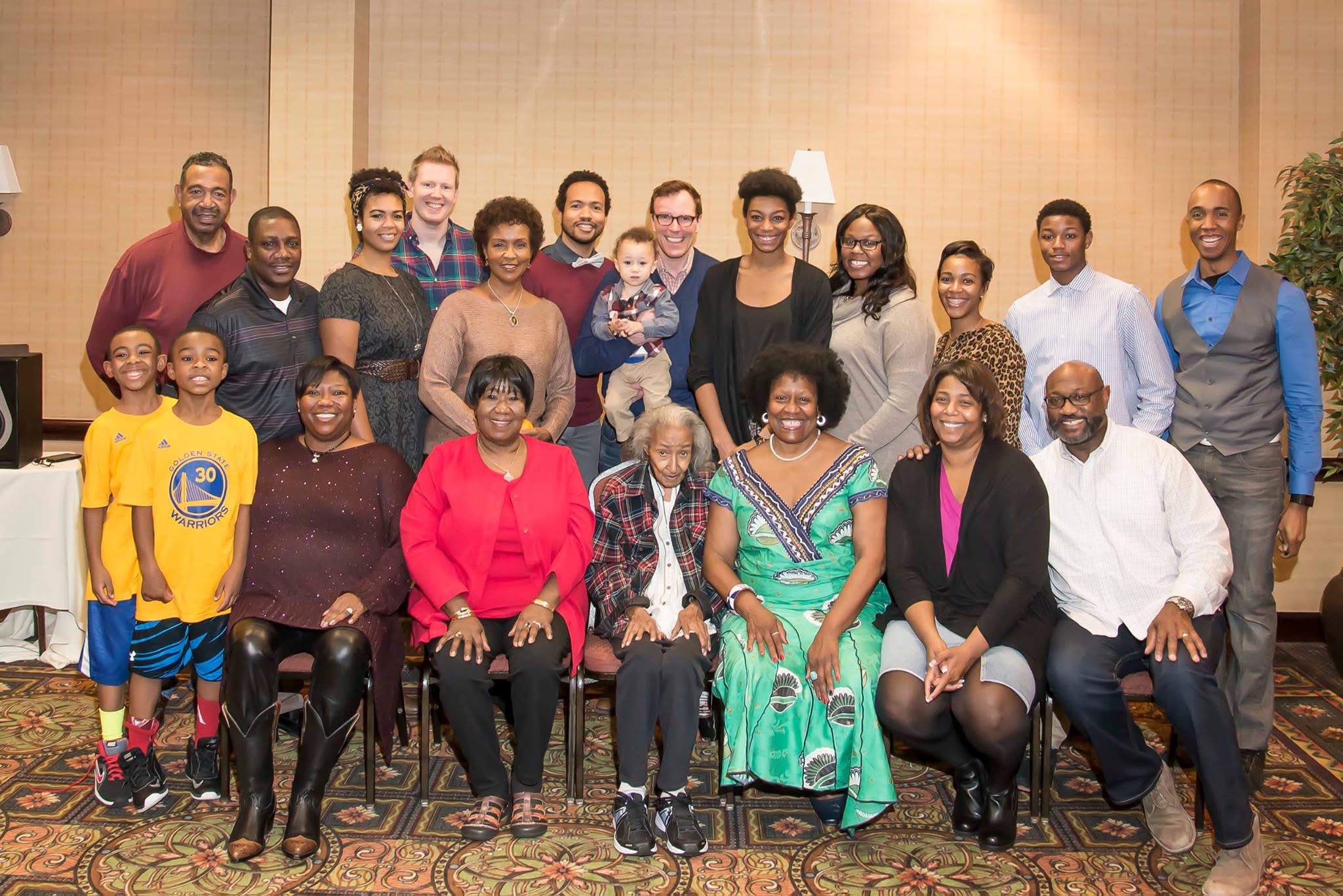
Margie Johnson with three generations of her family during a Christmas celebration
At Meals on Wheels Durham, Richardson is passionate about amplifying the voices of older adults, volunteers, and supporters, as well as promoting MOWD’s mission of nourishing both body and spirit through meals and meaningful relationships. The legacy of her great-grandmother and Chrill Care, Inc.’s service to her family makes Richardson feel more connected to the organization’s mission and the community involved, she says.
“It’s a privilege to work for an organization that supported my family and to be able to share that experience with people is special,” she says. “That’s why I love it when I’m able to volunteer or deliver routes here and there because it gets me out from behind the desk and in front of people. I love talking to people, because I understand how important it was for my family.”
And now that Richardson is older and learning more about her great-grandmother’s life, she says the experience makes her feel even more proud and grounded to be the person she is today, especially to come from such a great woman.
Richardson says if she could say at least one thing to her great-grandmother, it’d be:
“Thank you for being a great role model, inspiration, and having that strong personality. Because we have a family of strong women, and we’re very proud of that. So for me to come from that is very special to me.”
Nia Richardson